
2026-05-12 by Julia Walker
When Clutter Becomes an Estate Planning Problem
Comedian George Carlin once joked that a house is just a place to keep your stuff while you go out and get more. “Sometimes you gotta move, gotta get a bigger house,” he said. “Why? No room for your stuff anymore.”[1]
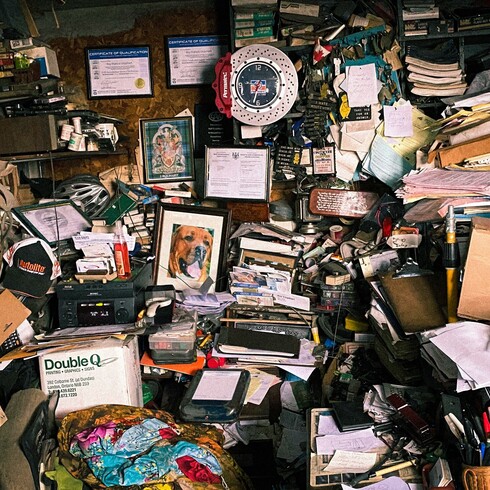
For many Americans, that joke hits close to home. We have a complicated relationship with our possessions, recognizing on some level that we may own too much even as we continue to accumulate more. The United States is one of the world’s leaders in consumer spending,[2] and while trends such as minimalism come and go, our belongings tend to keep piling up.
There is nothing inherently wrong with owning things. We work hard, and buying something new can feel like a reward. But over time, those rewards can start to weigh on us, creating stress, taking up space, and even leaving behind a burden for the people we care about.
The question is not just what we own. It is what happens to it later—who is left to sort through it, manage it, and ultimately decide what comes next.
America Has a Clutter Problem
An oft-cited statistic claims the average American home has 300,000 items in it.[3] While that number has been disputed, there is no debate that Americans own a great deal of stuff. And it is stressing us out.
● 25 percent of Americans admit to having a “clutter problem”[4]
● 84 percent worry that their homes are not organized enough[5]
● 55 percent say clutter is a major cause of stress[6]
Why do we accumulate so much?
Part of the answer has nothing to do with being American and everything to do with being human. We are predisposed to accumulate, in part because we evolved under conditions of scarcity.[7] It is the same reason we have trouble denying ourselves fats and sweets; our brains crave unnecessary items the way they crave unhealthy foods. Research also suggests that objects appeal to us on an emotional level, giving us a sense of security and connection to the past and to the people we love.[8]
Meaning, however, is subjective. Physical items may be tied to memory and identity in ways that are not easily unpacked.[9] What feels indispensable to one person may be meaningless to someone else. And when the time comes to administer an estate—to go over everything and decide what to do with it—those differences can trigger issues that far exceed any given item’s size, weight, or monetary value.
Why Being “Stuff-Blind” Can Complicate Estate Administration
There is a concept known as “nose blindness”—when your brain becomes so accustomed to a constant scent that it stops noticing it.[10] A similar phenomenon can happen with possessions. Over time, people can develop “clutter blindness,”[11] gradually losing awareness of how much they have accumulated.
Accumulating items and struggling to let go of them is normal. One person’s collection may be another’s clutter. But when belongings build up over a lifetime, the result can complicate estate administration far more than many people expect.
One way to assess the situation is to ask a few simple questions:
● Can you comfortably and safely move through every room in your home?
● Are important documents organized and easy for someone else to locate?
● If your home needed to be cleared out for sale, would it take days, weeks, or months?
Your answers will signal whether the amount of stuff you own—or the way it is organized—might cause problems down the line. If those issues are not addressed now, they will almost certainly fall to someone else later.
Potential complications that may arise during estate administration include the following:
● Missed or undiscovered assets. When family members or executors are organizing and inventorying a home under time pressure, something important may be overlooked or mistaken for junk.
● Delays in the probate process. Estate administration typically takes six to 12 months or longer. If a home contains decades of accumulated belongings, sorting, cataloging, and distributing personal property can add weeks or months to the process.
● Difficulty determining the value of property. After someone dies, their personal property often needs to be appraised. If belongings are disorganized, it can be harder to figure out what is there, which may lead to overlooking valuable items or incorrect valuations.
● Higher administrative costs. In a heavily cluttered home, professional estate cleanout services and the work of identifying and cataloging personal property can cost thousands of dollars,[12] and that is before expenses such as junk removal, estate sale commissions, or auctioneer fees.
● Delays in preparing or selling real estate. Sometimes, homes cannot be listed for sale until the contents have been removed. Excess clutter can push back the typical estate sale timeline and increase costs for utilities, insurance, and property taxes.
● Safety concerns that may limit the ability to age in place. Most older adults want to age at home,[13] but their house must be able to accommodate them as they grow older. Severe clutter can create fall hazards, block exits, and interfere with routine home maintenance.
● Trouble locating essential documents. Important records such as wills, trusts, insurance policies, account statements, passwords, and other key documents may be misplaced or buried among household belongings, complicating estate administration and financial decisions after death.
You cannot take it with you—but what you leave behind does not simply disappear. It becomes someone else’s responsibility to sort through, manage, and resolve, and it can turn into a complex, time-consuming problem for the people you care about most.
[1] George Carlin – Stuff, The Frug (July 13), https://thefrug.com/george-carlin-stuff.
[2] Understanding the US Consumer Market: Key Trends and Insights, Rsch. FDI (Mar. 15, 2023), https://researchfdi.com/understanding-the-us-consumer-market.
[3] Jean Chatzky, One in Four Americans Has a Clutter Problem — And Could Be Sitting on Some Serious Cash, NBC News (May 31, 2017), https://www.nbcnews.com/business/personal-finance/one-four-americans-has-clutter-problem-could-be-sitting-some-n766681.
[4] Id.
[5] Id.
[6] Id.
[7] Archana Ram, Why Do We Keep Buying New Stuff?, Patagonia (Nov. 15, 2023), https://www.patagonia.com/stories/culture/design/feeling-like-new/story-144207.html.
[8] Christian Jarrett, The psychology of stuff and things, The British Psych. Soc’y (Aug. 13, 2013), https://www.bps.org.uk/psychologist/psychology-stuff-and-things.
[9] Christopher R. Madan, Memory Can Define Individual Beliefs and Identity—and Shape Society, Sage J. (Dec. 13, 2023), https://journals.sagepub.com/doi/10.1177/23727322231220258.
[10] The Science Behind Olfactory Fatigue, Malibu Apothecary (Sept. 17, 2025), https://malibuapothecary.com/blogs/clean-candles/the-science-behind-olfactory-fatigue-why-you-stop-smelling-a-scent.
[11] Gretchen Rubin, Are You Clutter-Blind? Or Do You Know Someone Who Is?, Psych. Today (May 16, 2016), https://www.psychologytoday.com/us/blog/the-happiness-project/201605/are-you-clutter-blind-or-do-you-know-someone-who-is.
[12] Deirdre Sullivan, How Much Do Estate Cleanout Services Cost? [2026 Data], Angi (Apr. 4, 2026), https://www.angi.com/articles/estate-cleanout-services-cost.htm.
[13] Kim Parker and Luona Lin, Most older adults who live at home want to age in place, but they aren’t entirely confident they’ll get to, Pew Rsch. (Feb. 26, 2026), https://www.pewresearch.org/short-reads/2026/02/26/most-older-adults-who-live-at-home-want-to-age-in-place-but-they-arent-entirely-confident-theyll-get-to.
2024-04-04 by Sue Hunt
An intrafamily loan is a financial arrangement between family members—one who is lending and another who is borrowing. An intrafamily loan may be used to help a family member who needs money for a number of reasons:
Lending to a child or grandchild can be satisfying. Your loved ones can benefit from flexible repayment terms and interest rates while learning financial responsibility. This can be beneficial if the child or grandchild would otherwise have difficulty obtaining a loan through more traditional methods. It also gives you an opportunity to add to your investment income.
How you give or loan money to family members has potential tax implications. The right method depends on your family circumstances.
An intrafamily loan might be beneficial in estate planning for wealth transfers between generations while minimizing estate tax implications. Further, by using an intrafamily loan to provide money to a family member rather than making a gift, you can maintain control over the principal amount and how it is used.
Intrafamily loans are valuable tools for preserving wealth and offer the following advantages:
Under current tax law, gift and estate taxes are not imposed on gifts up to $13.61 million for individuals and $27.22 million for married couples in 2024. While many people's net worth is not that high, intrafamily loans may be a great option for high-net-worth families.
If the family member receiving the loan invests the money and the investment returns on the borrowed funds exceed the interest rate charged, the excess growth is passed to your family member without being subject to gift or estate taxes. This strategy preserves your lifetime estate tax exemption amount as long as all of the formalities of issuing a loan are observed. However, the initial loan amount (the principal) and interest owed to you will still be included in your taxable estate because the principal and interest are legally required to be paid to you. However, as previously mentioned, the growth in the investment will not be included in your taxable estate.
You might also consider loaning the money to a trust for the benefit of your family member as part of your planning strategy. As opposed to the strategy of loaning funds directly to your family member, the loan would be made to the trust. If the rate of return from investing the loan proceeds exceeds the loan's interest rate, the excess is considered a tax-free transfer to the trust.
With intrafamily loans, you have the flexibility to set the interest rate at a level lower than commercial lenders, as long as the rate is not below the Applicable Federal Rate (AFR) (read below for further discussion on the AFR). The cost savings for the borrower can be significant. Further, if the AFR is high when you initially make the loan, it may be easier to reissue the note from you to take advantage of any future lower interest rates than it would be to refinance a note from a third-party lender.
Intrafamily loans can play a crucial role in transferring a family business from one generation to the next. By providing financing to family members who wish to take over the family business, for example, you can ensure a smoother transition and help sustain the family legacy.
Determining the interest rate for your intrafamily loan is crucial to avoid unnecessary tax consequences. The Internal Revenue Service (IRS) publishes AFRs monthly, broken down into three tiers for short-term, mid-term, and long-term rates. Rates can be fixed or variable and structured to the advantage of both parties. The minimum AFR rate must be charged for loans over $10,000 regardless of a loved one's credit rating, and it is usually lower than most commercial lenders. If the interest rate for your intrafamily loan is below the AFR, the IRS may require you to pay income tax on the income you should have received under the applicable AFR even though the borrower did not pay you that amount (called imputed interest). Also, the amount of interest you did not collect but should have may also be considered a taxable gift to the borrower, potentially reducing the amount of gift and estate tax exemption available to you.
Since the IRS generally assumes that wealth transfers between family members are gifts, it is essential to have the proper documents showing that the transfer is intended to be a loan. You and your family member must sign a promissory note that adheres to the state-specific rules to properly document the loan transaction.
A comprehensive written promissory note is crucial. It helps avoid unnecessary tax consequences and clearly communicates the terms of the loan between family members to avoid misunderstandings and conflicts.
Every financial decision has the power to strain family relationships. When trying to determine if an intrafamily loan is right for your situation, ask the following questions:
You must carefully consider the decision to gift versus use intrafamily loans, including the income, estate, and gift tax implications. The tax rules regarding intrafamily loans are complex and may result in unintended consequences if the loan is not done correctly. If you already have an intrafamily loan in place, it is important to properly document it in your estate plan to ensure that everything will proceed smoothly if you pass away before the loan has been paid back. We are happy to meet with you and your tax advisor to make sure that this strategy is right for you and your family.

2024-04-08 by Sue Hunt
As a parent, you are responsible for the care of your minor child. In most circumstances, this means getting them up for school, making sure they are fed, and providing for other basic needs. However, what would happen if you and your child's other parent were unable to care for them?
It is important to note that if something were to happen to you, your child's other parent is most likely going to have full authority and custody of your child, unless there is some other reason why they would not have this authority. So in most cases, estate planning is going to help develop a plan for protecting your child in the event that neither parent is able to care for them.
What If You Die?
When it comes to planning for the unexpected, many parents are familiar with the concept of naming a guardian to take care of their minor children in the event both parents die. This is an important step toward ensuring that your child's future is secure.
Without an Estate Plan
If you and your child's other parent die without officially nominating a guardian to care for your child, a judge will have to make a guardianship decision. The judge will refer to state law, which will provide a list of people in order of priority who can be named as the child's guardian—usually family members. The judge will then have a short period of time to gather information and determine who will be entrusted to raise your child. Due to the time constraints and limited information, it is impossible for the judge to understand all of the nuances of your family circumstances. However, the judge will have to choose someone based on their best judgment. In the end, the judge may end up choosing someone you would never have wanted to raise your child to act as your child's guardian until they are 18 years old.
With an Estate Plan
By proactively planning, you can take back control and nominate the person you want to raise your child in the event you and the child's other parent are unable to care for them. Although you are only able to make a nomination, your choice can hold a great deal of weight when the judge has to decide on an appropriate guardian. The most common place for parents to make this nomination is in their last will and testament. This document becomes effective at your death and also explains your wishes about what will happen to your accounts and property. Depending on your state law, there may be another way to nominate a guardian. Some states recognize a separate document in which you can nominate a guardian, and that document is then referenced in your will. Some people prefer this approach because it is easier to change the separate document as opposed to changing your will if you want to choose a different guardian or backup guardians.
What If You Are Alive but Cannot Manage Your Own Affairs?
Although most of the emphasis is on naming a guardian for when both parents are dead, there may be instances in which you need someone to have the authority to make decisions for your child while you are alive but unable to make them yourself.
Without an Estate Plan
Not having an incapacity plan in place that includes guardianship nominations means that a judge will have to make this judgment call on their own with no input from you (similar to the determination of a guardian if you die without a plan in place).
With an Estate Plan
A comprehensive estate plan can also include a nomination of a guardian in the event you and the child's other parent are incapacitated (unable to manage your own affairs). Although you are technically alive, if you cannot manage your own affairs, there is no way that you will be able to care for your minor child. This is another reason why having a separate document for nominating a guardian (as described above) may be preferable to nominating guardians directly in a last will and testament. Because a last will and testament is only effective at your death, a nomination for a guardian in your will may not be effective when you are still living. However, a nomination in a separate document that anticipates the possibility that you may be alive and unable to care for your child can provide great assistance to the judge when evaluating a guardian. Depending on the nature of your incapacity, this guardian may only be needed temporarily, with you assuming full responsibility for your child upon regaining the ability to make decisions for yourself.
What If You Are Just Out of Town?
Sometimes, you travel without your child and will have to leave them in the care of someone temporarily. While you of course hope that nothing will go wrong while you are away, it is better to be safe than sorry.
Without an Estate Plan
Without the proper documentation, there may be delays in caring for your child if your child were to get hurt or need permission for a school event while you are out of town. The hospital or school may try to reach you by phone in order to get your permission to treat them or allow them to attend a school event. Depending on the nature of your trip, getting a hold of you may not be easy (e.g., if you are on a cruise ship with little access to phone or email). Ultimately, your child will likely be treated medically, but the chosen caregiver may encounter additional roadblocks trying to obtain medical services for your child, and they may not be able to make critical medical decisions when needed.
With an Estate Plan
Most states recognize a document that allows you to delegate your authority to make decisions on behalf of your child to another person during your lifetime. You still maintain the ability to make decisions for your child, but you empower another person to have this authority in the event you are out of town or cannot get to the hospital immediately. This document allows your chosen caregiver to make most decisions on behalf of your child, except for consenting to the adoption or marriage of your child. The name of this document will vary depending on your state and is usually effective for six months to a year, subject to state law. Because this document is only effective for a certain period of time, it is important that you touch base with us to have new documents prepared so that your child is always protected.
We Are Here to Protect You and Your Children
Being a parent is a full-time job. We want to make sure that regardless of what life throws at you, you and your child are cared for. Give us a call to learn more about how we can ensure that the right people are making decisions for your child when you cannot.
2025-02-04 by Sue Hunt
A home is often one of the most important assets that people own. Therefore, most people want to stay in their home until they die and then have a loved one receive it. One common way to pass a home to loved ones is through a will. However, transferring property with a will requires probate, which is generally considered a lengthy, costly, and public court process that many actively seek to avoid.
There are several ways an estate plan can transfer property without a will or probate court involvement when the owner passes away. In addition to a lifetime transfer of the property (by sale or gift), certain types of deeds can be used that take effect only upon the property owner's death and do not subject the property to probate. However, using these deeds for probate avoidance can potentially introduce new issues. A trust-based estate plan may be a better option if the goal is simply to avoid probate.
Home Ownership and Inheritance
We are living through one of the largest intergenerational wealth transfers in history. Roughly one in six Americans expect to receive an inheritance in the next 10 years, and among those, nearly half anticipate inheriting property such as a house.[1]
According to Pew Research, in 2021, nearly two-thirds of US households lived in a home they owned as their primary residence.[2] Homeowners have, on average, around $174,000 in equity in their homes—more than double the value of their next most valuable asset, retirement accounts, which have an average value of $76,000.[3]
Real Property, Legal Rights, and Trusts
A key concept in estate planning is honoring people's wishes by helping them control, as much as possible, what they own and what happens to it after their death.
An estate plan enables a homeowner to decide what happens to their property after they pass away, ensuring that it goes to the person (or people) they choose in a manner of their choosing, whether that means keeping it in the family and setting limits on its use or transferring the property to a beneficiary without restrictions.
Options for Transferring Real Property at Your Death
Estate planning is highly flexible, offering multiple ways to satisfy someone's wishes for what happens to their money and property when they die, each with a mix of benefits and downsides.
To avoid probate, there are many ways to transfer real property, both during the owner's lifetime and at their death. Some solutions can cost less than a trust, but as the examples below show, they can also have significant downsides and risks.
Deed-Based Transfers
A deed is a legal document that transfers real estate ownership from the current owner (the grantor) to another individual or entity (the grantee). Several types of deeds can be used to gift real property at the grantor's death. They include the following:
Again, not all of these types of deeds are legally valid in all states. An experienced estate planning attorney can explain what tools are available to you and discuss the benefits and potential risks.
Downsides to Using a Deed to Transfer Property at Your Death
There is no creditor protection for your beneficiaries. When a deed transfers property to a beneficiary, that property goes to the beneficiary outright. There are no strings attached and no protections. For instance, if the beneficiary were to receive the property during a bankruptcy proceeding, it might be used to satisfy the creditors because it is now considered the beneficiary's property.
There is no protection if the beneficiary is disabled or unable to manage their affairs. As previously mentioned, when the beneficiary receives the property, it is theirs. However, if they receive the property when they cannot manage their affairs, its management falls to another person. It may be handled by a court-appointed guardian or conservator or an agent under a financial power of attorney, who can do whatever they want with it (as long as it is in the incapacitated beneficiary's best interest). Also, if the beneficiary receives any means-based assistance, the sudden inheritance could jeopardize those benefits by placing the beneficiary above any applicable asset threshold.
There are no protections for you if you cannot manage your affairs. These deeds are a sufficient way to transfer property after you are deceased. However, if you cannot manage your affairs during your lifetime, the named beneficiary or remainderman has no access to or interest in the property to help you manage it until you pass away. You will have to rely on an agent under a financial power of attorney (if you have one) or a court-appointed guardian or conservator to manage the property on your behalf.
Your beneficiary is free to do what they want. As already discussed, if you use a deed to transfer ownership at your death, your beneficiary will receive the property outright. You cannot add any conditions or requirements regarding the property or its use. The beneficiary can sell, mortgage, or use it as a rental property (subject to applicable zoning restrictions). It is their property to do with as they please. Their intended use of the property may not align with your wishes.
Using a Trust to Transfer Real Property
While you may view your home as a place to live and not as an investment or financial vehicle, that perception can change when you pass away and the home passes to a loved one, particularly if that loved one already has a primary residence.
A beneficiary who inherits a home may decide to sell the property; turn it into a rental; renovate the property to use it as a farm or business; sell off individual structures on the property (such as a barn or historic structure); cash in on its natural resources (e.g., allow timber to be harvested); or even tear down the original home and build a new one in its place. When more than one beneficiary inherits the property, disagreements about how to best use it could arise.
You might not care what happens to your home when you are gone. However, if you want to set restrictions on its use for any reason—whether those reasons are sentimental or have the practical intent of reducing conflicts among multiple beneficiaries—you must use the right estate planning tool.
Consider placing your home in a living trust that legally owns the property, with you serving as a trustee and being the current beneficiary during your lifetime. This allows you to stay in your home—and maintain control over it—while you are alive. When you pass away, the home does not go through probate because you do not technically own it. Instead, a successor trustee assumes legal responsibility for the property and manages it or gives it away in accordance with your trust's terms.
The trust terms can be highly detailed, and limitations can be set on how the property can be used. You can stipulate, for example, that the property must be shared as a family vacation home and cannot be used for business purposes. You can require that the house be held in the trust until your minor children reach a certain age so they can remain in the home after your passing. While the trust owns the property, your terms will govern its use. As soon as the property is distributed from the trust, you lose all control over it.
The Best Way to Transfer Property for Every Situation
Estate planning is a highly personal process that must consider many factors, each of which can have multiple solutions that present a unique set of benefits and drawbacks.
Avoiding probate is usually just one estate planning consideration among many, and it may not be desirable in every situation.
Determining the best way to pass down real property at death depends on your preferences and family circumstances. An estate planning attorney can explain each available option and help you decide what is best for your situation.
[1] The "Great Wealth Transfer" is underway but nearly half expecting an inheritance are not ready to manage it, finds New York Life Wealth Watch Survey, New York Life, July 19, 2023, https://www.newyorklife.com/newsroom/2023/new-york-life-wealth-watch-great-wealth-transfer.
[2] Rakesh Kochhar and Mohamad Moslimani, 4. The assets households own and the debts they carry, Pew Research Center, Dec. 4, 2023, https://www.pewresearch.org/2023/12/04/the-assets-households-own-and-the-debts-they-carry.
[3] Id.

2025-02-04 by Sue Hunt
If you've recently tied the knot or have been married for a while and have acquired more assets, you might be considering joint ownership. While it seems like a straightforward and convenient option, it might not always be the best choice depending on your situation.
After getting married, some couples choose to add each other to their existing bank accounts, brokerage accounts, and real estate as joint tenants with rights of survivorship (JTWROS). This means both of you have equal rights to the property, and if one of you passes away, the other automatically inherits the deceased's share without needing to go through probate.
For example, if you and your spouse own a bank account as JTWROS and one of you dies, the surviving spouse becomes the sole owner of the account once the necessary documentation is provided. While this might seem like an easy solution, there are some potential pitfalls.
Joint ownership can lead to problems, especially if the relationship is unstable. Here are some common issues:
A comprehensive estate plan, such as using a trust to hold your assets, can better control and protect your property. Whether due to creditor issues, incapacity, or death, the right estate plan ensures you and your spouse can continue enjoying your assets as intended while minimizing potential taxes and court costs.
It's important to consult with an estate planning professional to understand your options. If you've recently gotten married or are acquiring additional assets with your spouse, contact us at 336-373-9877 to learn about the best approach to owning your assets.

2026-05-13 by Julia Walker
Does Buying a Home Affect Your Estate Plan? 3 Myths Debunked
Myth 1: Buying a home does not affect my estate plan.
A home is often your most significant illiquid asset and a key part of your financial portfolio. If it is not properly titled or coordinated with your estate plan, your home may not pass to whom you would like in the way you intend. Updating your estate plan after a home purchase helps ensure that the transfer and management of your property is handled smoothly, avoids unnecessary delays or probate complications, and protects your family’s ability to remain in the home.
Myth 2: My estate plan automatically covers my new home.
While your will or trust may include general language covering your assets, it may not fully address a home purchased after these documents were initially created. If your estate plan has not been updated, it may not specifically address how you want your new home handled or who should receive it. Reviewing your plan with an attorney ensures that your new home is properly accounted for and aligned with your overall wishes.
Myth 3: If something happens to me, my spouse will automatically be able to stay in the home.
A surviving spouse may or may not be able to remain in the home, depending on factors such as how the property is titled, whether there is a mortgage, and how your overall estate plan is structured. For example, if the home is solely owned by the spouse who dies rather than jointly owned or properly held in a trust, the property may need to go through a court-supervised probate process before the surviving spouse has full legal authority over it. Even when the surviving spouse has the legal right to remain in the home, affordability may still be an issue. If there is too little life insurance or other available funds to cover the mortgage, taxes, insurance, and upkeep, the surviving spouse may face financial pressure and even need to sell the home. Coordinated planning can help ensure that your family has not only the legal ability to remain in the home but also the financial resources to maintain it.